
Clutch Slipping? 5 Warning Signs Your European Car Needs Clutch Repair in Pacifica, CA
A clutch rarely fails without giving you some warning first. You may notice the engine revving differently, a strange smell after a hill start, or a pedal that no longer feels the way it used to. Those changes are easy to dismiss when the car still moves, but they often point to a problem that will become more expensive if ignored.
For drivers in Pacifica, clutch wear can become especially noticeable during hill starts, repeated stop-and-go traffic, and everyday driving along Highway 1. Whether you drive a BMW, Audi, Volkswagen, MINI Cooper, or another European vehicle, understanding the early signs can help you arrange an inspection before the car loses drive completely.
Here are five symptoms worth taking seriously.
What Does the Clutch Do?
In a manual-transmission vehicle, the clutch controls the connection between the engine and transmission. When you press the clutch pedal, the system temporarily separates the engine’s power from the transmission so you can change gears. When you release the pedal, the clutch reconnects the engine to the drivetrain and transfers power to the wheels.
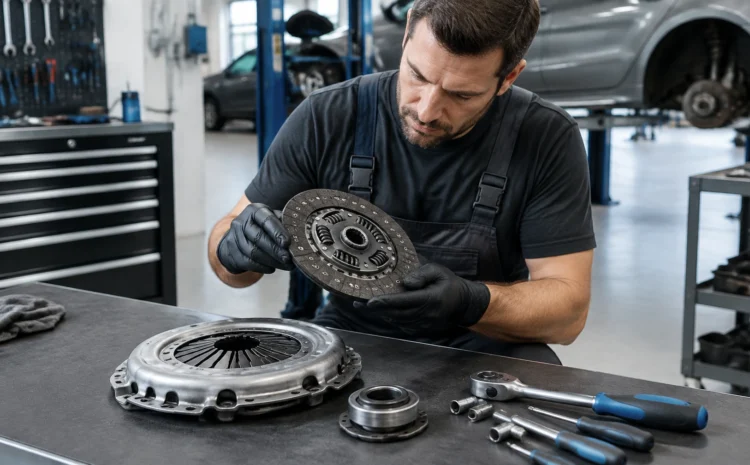
The primary clutch assembly includes:
- The friction disc, which transfers engine power
- The pressure plate, which clamps the disc against the flywheel
- The release bearing or hydraulic release mechanism
- The flywheel, which provides the mating surface for the disc
These parts work together every time you pull away, change gears, or stop. Friction material gradually wears down, while heat, contamination, hydraulic problems, and damaged components can affect how smoothly the system operates.
1. The Engine Revs, but the Car Does Not Accelerate Normally
This is one of the clearest signs of a slipping clutch.
You press the accelerator, the engine speed rises sharply, but the vehicle does not gain speed in proportion. The sensation may be most obvious in a higher gear, while climbing a hill, or when accelerating from a low speed. You may feel as though the engine is working hard but the power is not reaching the wheels.
A worn friction disc is a common cause. As the disc loses its ability to grip the flywheel and pressure plate, it begins to slip under load. Continued driving creates more heat, which can damage the pressure plate and flywheel as well.
A clutch that slips occasionally may still get you home, but it should not be treated as a minor inconvenience. The problem usually becomes more frequent until the vehicle can no longer transfer power reliably.
2. The Clutch Pedal Feels Spongy, Stiff, or Sinks to the Floor
A change in pedal feel deserves attention, but it does not automatically mean the clutch disc is worn out.
A soft or spongy pedal can indicate air, low fluid, a leak, or an issue with the clutch master cylinder or slave cylinder. A pedal that becomes unusually stiff may point to a pressure-plate problem, a release mechanism issue, or binding in the system. If the pedal sinks to the floor and does not return normally, a hydraulic fault is a strong possibility.
This distinction matters. The clutch master cylinder and slave cylinder use hydraulic pressure to move the release mechanism. If one of those components fails, the clutch may not disengage fully, making it difficult or impossible to select gears. Replacing the clutch disc alone would not correct that problem.
A proper diagnosis should check fluid condition, leaks, hydraulic pressure, pedal travel, and release movement before parts are ordered. That approach helps prevent replacing a healthy clutch assembly when the actual fault is hydraulic.
3. The Car Chatters or Judders When Pulling Away
A clutch should engage progressively. If the vehicle shakes, chatters, or judders as you release the pedal, something in the engagement system may not be operating evenly.
Possible causes include:
- A contaminated or unevenly worn clutch disc
- An overheated pressure plate
- A damaged or improperly machined flywheel
- Worn engine or transmission mounts
- A failing dual-mass flywheel
The symptom may be more pronounced when the vehicle is cold, when starting on an incline, or after repeated stop-and-go driving. It is also possible for a clutch to chatter without the disc being completely worn out.
That is why replacing only one visible component can lead to repeat repairs. The full system needs to be assessed so the source of the vibration is identified rather than guessed.
4. You Smell a Burning Odor After Hill Starts or Traffic
A sharp burning smell after pulling away on a hill usually means the clutch has generated excessive heat. The odor may resemble overheated paper or friction material.
Some slip during engagement is normal, especially when moving from a stop. The problem occurs when the clutch remains partially engaged for too long. Pacifica’s grades, frequent hill starts, and stop-and-go coastal traffic can all increase the amount of heat produced in the clutch and bellhousing.
Driving habits also make a difference. Common examples of unnecessary clutch wear include:
- Resting your foot on the clutch pedal while driving
- Holding the vehicle on a hill with the clutch instead of the brake
- Repeatedly slipping the clutch to move through traffic
- Using excessive engine speed during takeoff
Use the brake or parking brake to hold the car on a hill, then release it as the clutch engages smoothly. At longer stops, selecting neutral and releasing the clutch pedal can also reduce unnecessary load on the release bearing.
If the burning smell returns, arrange an inspection rather than trying to mask the symptom with a change in driving technique. Heat may already have affected the disc, pressure plate, or flywheel.
5. Gears Become Difficult to Engage
Difficulty selecting first gear or reverse is another warning sign. You may feel resistance through the shifter, hear grinding, or find that the vehicle creeps forward even with the clutch pedal fully depressed.
This can happen when the clutch is not releasing completely. A worn disc is one possible cause, but hydraulic problems, a failed release bearing, damaged linkage, or transmission-related issues can create similar symptoms.
A pedal that sinks, a low fluid level, or a visible leak points the diagnosis in a different direction from a clutch that slips under acceleration. That is why a road test and system inspection are more useful than replacing parts based on one symptom.
If the vehicle becomes difficult to shift or loses the ability to move, avoid forcing the gear lever. Continued driving may damage synchronizers or leave you stranded in traffic.
Why the Flywheel Must Be Checked During a Clutch Job
The flywheel sits behind the clutch and provides the surface against which the disc engages. It also helps control vibration and smooth out the transfer of engine torque.
Many European vehicles use a dual-mass flywheel. Unlike a conventional single-mass flywheel, a dual-mass design uses internal springs and two connected masses to absorb drivetrain vibration. It is an important part of the vehicle’s refinement, but it must be inspected carefully when the clutch is removed.
A technician should check for heat damage, cracks, scoring, excessive movement, noise, grease leakage, and other signs that the flywheel is outside the manufacturer’s limits. A dual-mass flywheel should not automatically be resurfaced like a conventional flywheel. Its condition and measurements determine whether it can be reused.
Skipping this inspection can result in paying for the job twice. A new clutch installed against a damaged flywheel may continue to chatter, slip, or produce noise.

What a Proper European Car Clutch Job Involves
A complete clutch diagnosis starts with the symptoms you noticed and a road test when appropriate. The technician should evaluate pedal feel, engagement, shifting, noise, and signs of slipping. The hydraulic system should be tested before deciding that the clutch disc needs replacement.
If the transmission has to be removed, the inspection should include the clutch disc, pressure plate, release bearing, flywheel, seals, mounts, and nearby transmission components. Depending on the vehicle, the hydraulic release cylinder may also need attention.
Correct parts and specifications matter, particularly on European vehicles. The clutch kit must match the vehicle’s engine, transmission, and calibration requirements. The correct fluid and manufacturer procedures should be followed, and any required adaptations or post-repair checks should be completed.
European Motor Werks provides European auto repair in Pacifica, CA for drivers who want a careful diagnosis rather than a parts-swapping approach. The shop’s ASE-certified technicians bring more than 40 years of combined experience, with a focus on European vehicle requirements and OEM specifications.
That includes BMW repair in Pacifica, CA, Audi repair in Pacifica, CA, Volkswagen repair in Pacifica, CA, and MINI Cooper repair in Pacifica, CA. Founder Eddie’s long-standing knowledge of European vehicles helps the team explain what has failed, what can be reused, and what should be replaced while the transmission is already removed.
Get a Clutch Problem Checked Before It Becomes a Breakdown
A slipping clutch, burning smell, abnormal pedal, judder, or difficult gear engagement should not be ignored. The same symptom can come from a worn friction disc, a hydraulic fault, a release component, or a damaged flywheel, and the repair depends on identifying the real cause.
If your European car is showing clutch trouble in Pacifica, schedule an inspection with European Motor Werks at 931 Palmetto Ave, Pacifica, CA 94044. You can also book a service appointment to receive an honest estimate and a repair plan built around your vehicle’s actual condition.